Opening a Personal Training Studio: The Complete Checklist
How to open a personal training studio: a complete checklist covering client numbers, startup budget, the lease, insurance, pricing and your first 90 days.

There is a moment in most training careers when the rented corner of someone else's gym stops making sense. You are paying floor fees every month, your clients book around another club's timetable, and the squat rack you need is always taken at 6 pm. If you are researching how to open a personal training studio, you are probably at that moment. What follows is the checklist that decides whether the studio works: the client math, the budget, the space, the paperwork and the systems, in the order the decisions come up.
Start with the client math, not the location
A studio is viable before you sign anything, or it is not viable at all. The location does not fix weak numbers.
Count the clients who pay you today, not the ones who say they would train with you if you had your own place. Then ask each of them, directly and individually, whether they would follow you to a new address ten minutes away. You will be surprised in both directions. Some of your most loyal clients are loyal to the gym, not to you. A few quiet ones will turn out to be your first referral engine.
A workable floor is around 15 committed clients averaging two sessions a week. At 55 EUR per session that is roughly 6,600 EUR a month at full attendance. Real months are not full. Holidays, illness and cancellations take a slice, so plan revenue at about 80 percent of the theoretical number and see whether that still clears your projected fixed costs with room to pay yourself. If it does not, stay where you are and build the client list first. Rent is patient. It arrives every month whether your diary is full or not.
How to open a personal training studio in the right order
The sequence matters as much as the items. Trainers who start with the lease end up designing the business around a room. The order that works:
- Confirm at least 15 clients and their willingness to move with you.
- Build a 12-month cash flow projection, month by month, with a slow first quarter.
- Choose your legal structure and get insured.
- Find the space and negotiate the lease, including rent-free months for the works.
- Fit out the room and buy equipment.
- Set your prices and write your client agreement.
- Set up booking, payments and client records before opening day, not after.
- Soft open with your existing clients for two weeks.
- Run a referral push once the room feels lived in.
- Sit down with the numbers at day 90 and adjust.
Each of those deserves its own section, and the expensive mistakes hide in three of them: the budget, the lease and the pricing.
The startup budget, line by line
Write the budget before you look at a single property listing, because the listing will seduce you into reverse-engineering the numbers.
The deposit is usually three months of rent. On a 1,500 EUR space that is 4,500 EUR gone on day one. The fit-out is the line people underestimate most: flooring that can take dropped weights, mirrors, lighting, a shower that works, paint and signage. For a modest room in decent condition, expect 8,000 to 20,000 EUR. A space that needs a new bathroom or electrical work is a different project, and usually a worse one.
Equipment for one-on-one training is refreshingly cheap compared with a gym floor. One good rack, a barbell set, dumbbells from 2 to 40 kg, an adjustable bench, a cable machine or functional trainer, and a small conditioning corner. Bought as a mix of new and quality used, 10,000 to 18,000 EUR covers it. Skip the cardio line entirely at the start. A studio client who wants 40 minutes on a treadmill is not really a studio client, and each machine eats floor space that earns nothing.
Then the buffer, which is not optional. Three months of total fixed costs sitting in the account before you open. If rent, utilities, insurance and software come to 2,200 EUR a month, that is 6,600 EUR you do not touch. Most first-year studio failures are not bad businesses. They are decent businesses that ran out of cash in month four.
All in, a realistic opening budget for a small studio lands between 30,000 and 55,000 EUR. If your plan says 12,000 EUR, a line item is missing, and it is probably the fit-out or the buffer.
The space is smaller than you think
One-on-one and semi-private training does not need 400 square metres. For one or two trainers working simultaneously, 80 to 130 square metres is comfortable. What matters more than size: ceiling height for overhead work, at least one shower that is genuinely clean, and parking or transit within a short walk. Visibility matters far less than gym owners assume. Your clients come by appointment. Nobody walks past a personal training studio and wanders in for a session.
On the lease, ask for rent-free months to cover the fit-out period. Two is a normal request, three is a good outcome. Get the permitted use of the property confirmed in writing before signing. A landlord's verbal assurance that "fitness is fine here" is worth what it costs.
Paperwork, insurance and the boring middle
The exact requirements depend on where you operate, so treat this as the categories to close rather than a legal guide. You need a registered business entity, professional and public liability insurance, written client agreements with a health screening and informed consent, a clear cancellation policy, and whatever your local rules require on first aid equipment and staff certification. If a second trainer will work in the space, decide early whether they are an employee, a freelancer renting your hours, or a revenue-share partner. That single decision shapes your costs, your risk and your ability to take a week off.
None of this is fun. All of it is cheaper to do before opening than after an incident.
Price for the studio, not for the gym floor
The move to your own space is the natural moment to raise rates, and most trainers waste it. Your costs went up, your service went up, and clients who followed you expected the change. A trainer charging 50 EUR in a shared gym can defensibly charge 60 to 70 EUR in a private studio, more in a large city.
Structure matters more than the headline rate. Single sessions sold one at a time produce an unpredictable diary and constant selling. Sell packs of 12 or 24 sessions with an expiry date, or better, monthly plans on recurring payment that include a fixed number of sessions. Recurring plans smooth your cash flow and quietly fix attendance, because a client who has already paid for March shows up in March. Put your no-show and late-cancellation policy in the agreement from day one. Introducing it later, to the three clients who abuse the diary, is a much harder conversation.
Systems from day one
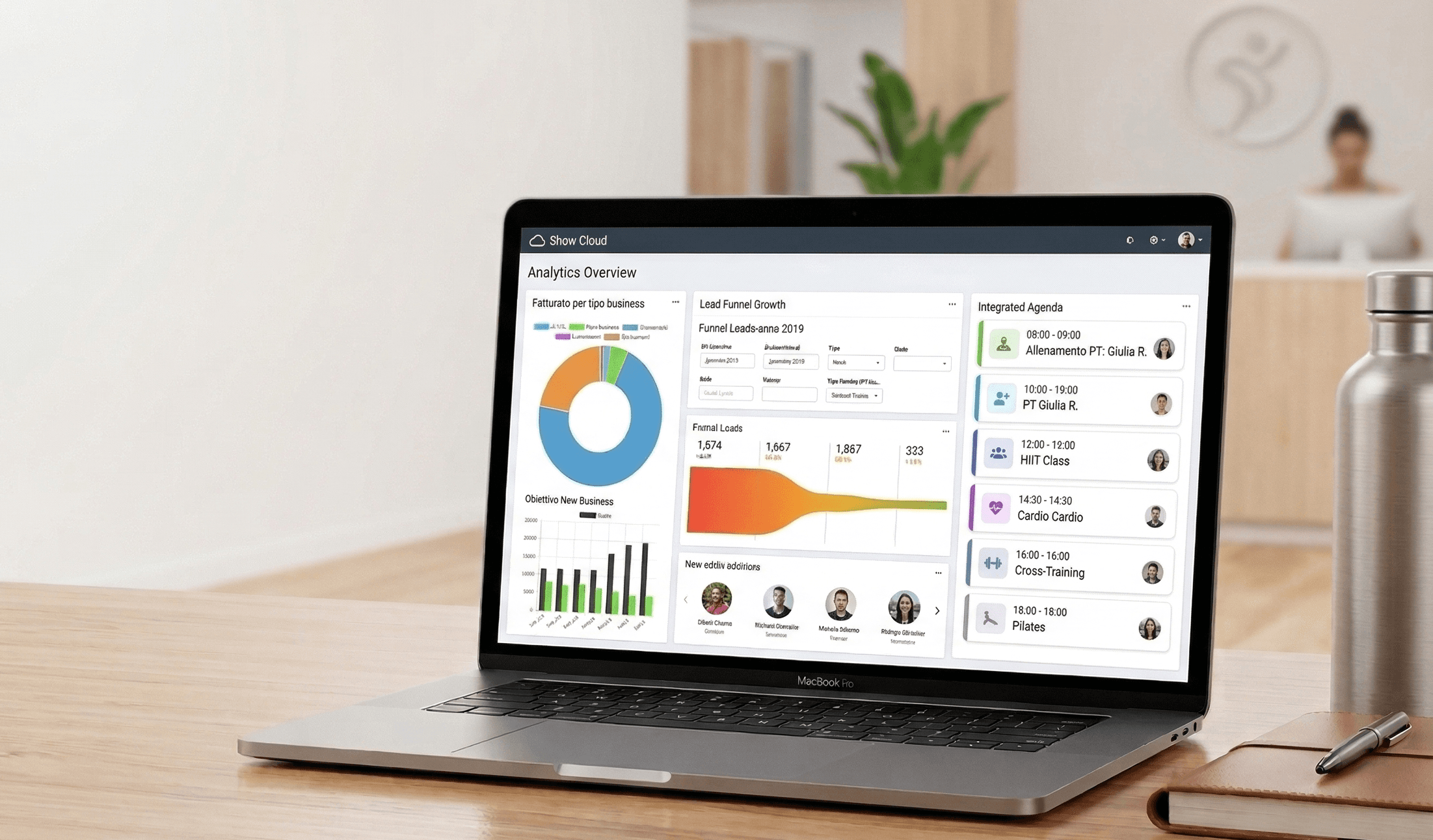
A studio with 20 clients generates a surprising amount of admin: bookings, reschedules, package balances, payment collection, training records, expiring agreements. On a spreadsheet this consumes evenings. The alternative is running scheduling, recurring billing and client records through software built for personal training clubs, where a session booked is a session invoiced and a failed payment chases itself. You can see how the pieces fit on the features page.
The point is not the software itself. The point is that you are the product. Every hour you spend on invoices is an hour you cannot sell, and at 60 EUR an hour your admin time is the most expensive labour in the building.
The first 90 days
Open softly. Move your existing clients in during the first two weeks and let the operational wrinkles show up while the audience is friendly. Then run one deliberate referral push: a free session for the referrer and a discounted starter pack for the friend works better than any local ad, because your clients already sell you at dinner parties.
Fill the off-peak hours with small group sessions of three or four people at a lower per-head rate. Mid-morning and early afternoon are dead for one-on-one but fine for semi-private, and the room is already paid for.
Track three numbers weekly: sessions delivered, revenue per open hour, and no-show rate. At day 90, sit down with them. If sessions are growing and revenue per hour is flat, your pricing is wrong. If both are flat, your pipeline is the problem, not the studio.
FAQ
How many clients do I need before opening a studio?
Around 15 committed clients averaging two sessions a week is a defensible floor for a solo studio, provided most confirm they will follow you. Below that, the fixed costs eat the margin and you spend your first year selling instead of training. The count that matters is clients who currently pay you, not contacts who like your posts.
Should I buy new or used equipment?
Used for the heavy steel: racks, bars, plates and dumbbells barely age and often cost half of retail. New for anything with upholstery, cables or electronics, because a worn bench reads as neglect to a client paying premium rates and cable machines are expensive to repair. A mixed approach keeps the equipment line under 18,000 EUR for most studios.
Should I open alone or with another trainer?
Open alone if your own diary is not yet full, because a partner shares revenue you do not have yet. The lighter option is renting your off-peak hours to a freelance trainer at a fixed hourly or monthly rate. It covers part of the rent, keeps the room busy, and commits you to nothing if the relationship does not work.
Where to go from here
Take an evening and write three numbers down: confirmed clients who will follow you, total opening budget including the buffer, and your break-even month from the cash flow projection. If all three hold up, you are not dreaming about a studio anymore. You are opening one.
If you want the admin side handled before your first client walks in, book a demo and we will set up bookings, recurring payments and client records the way a one or two trainer studio actually runs them.